Mozart Dinner Prague
Visitor Food Guide

What Food Is Prague Known for

Prague's kitchen is a slow, wintering cuisine that survived four empires and a command economy, and it reads very differently at a banquet table than at a beer hall counter. This what food is prague known for guide sets out the culinary logic behind the plate — and the practical frame for eating it well in Staré Město.

13 min read Updated 2026-08-24 Fact-checked
What Food Is Prague Known for

Quick answer

Prague is known for slow-roasted pork, beef in cream sauce, and bread dumplings, eaten alongside Czech lager. Nearly every signature dish is a braise or a roast built for cold months, so summer menus lean lighter. At Boccaccio Ballroom, Králodvorská 652/4, entry is free at 0 CZK but restricted to events and dining guests — the food arrives as part of a booked evening, not a walk-in menu.

Bohemian cooking has no national tomato. That single absence explains more about the Czech table than any list of dishes: the flavour architecture here is fat, salt, caraway, marjoram and sour cream, developed in a landlocked basin where winters ran long and preservation mattered more than freshness. Visitors arriving with a Mediterranean palate often misread this as heaviness. It is closer to engineering. Anyone asking what food is prague known for is usually really asking two questions at once — which dishes carry the culture, and where a traveller with three evenings should actually eat them. The dishes themselves belong to the highlights section below. The context is this: Prague's food identity was shaped by the guild kitchens of Staré Město, the Habsburg court's Viennese borrowings, and the beer culture that gave every meal its acidic counterweight. Pilsner-style lager is not a drink pairing here; it is a structural component. Czech cuisine, česká kuchyně, was codified in nineteenth-century cookbooks by Magdalena Dobromila Rettigová and then flattened by four decades of state canteens — which is why the best versions today are found in kitchens deliberately reconstructing what was lost. The Boccaccio Ballroom sits inside the Grand Hotel Bohemia at Králodvorská 652/4, a few minutes from the Powder Gate and Old Town Square. Its Neo-Baroque hall was built as a ballroom, not a restaurant, and that governs how dining works: entrance costs 0 CZK, but access is restricted to events and dining guests. There is no drop-in table. A dinner here is bound to a scheduled programme, which changes the calculus for anyone planning a food-led itinerary of Prague landmarks — the meal is a fixed point in the evening, not a flexible one. The practical consequence is timing. The recommended arrival window is 18:30–18:45, early enough to order drinks and be seated before the performance begins. Guests who treat a concert dinner as a normal restaurant booking tend to arrive at the start time and eat their first course in a darkened room. Doors at the address operate across a broad daily window, but the meal does not — it runs to the programme. For any traveller researching what food is prague known for with a Mozart dinner already in mind, the sequence matters as much as the menu: book the evening first, arrive in the window, and let the courses land where they were designed to.

“Pilsner-style lager is not a drink pairing here; it is a structural component.”
What to see

What Food Is Prague Known For? Core Czech Specialties

Prague is renowned for its hearty, comforting Central European cuisine, which heavily features slow-cooked meats, rich gravies, and steamed dumplings. Visitors dining in the historic Boccaccio Ballroom can experience some of these culinary traditions through menus inspired by local Czech and Austrian recipes.

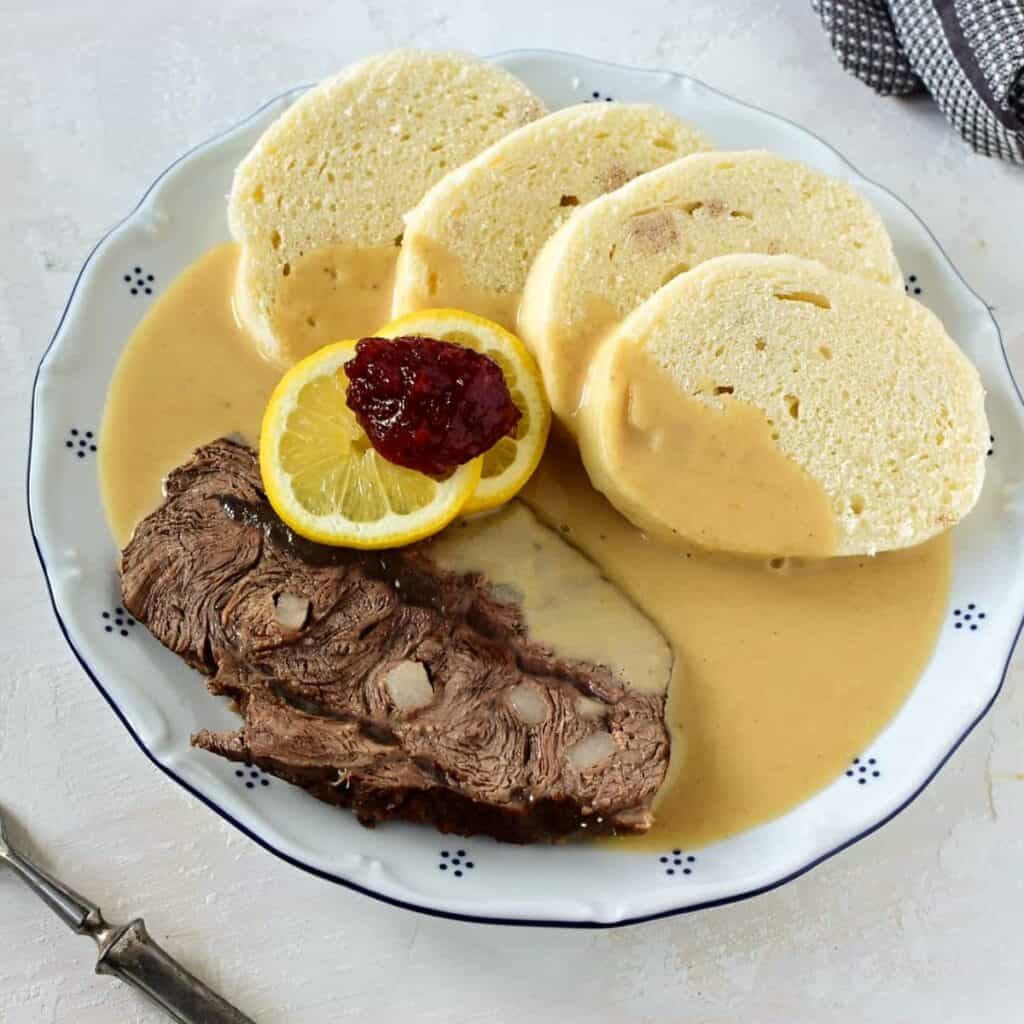
Svíčková na Smetaně

Svíčková na Smetaně

This dish features beef sirloin marinated with root vegetables, slow-roasted, and served in a vegetable-laced cream sauce. It is traditionally garnished with a slice of lemon, whipped cream, and tart cranberries.

Look for the bright red cranberries contrasting against the golden cream sauce.
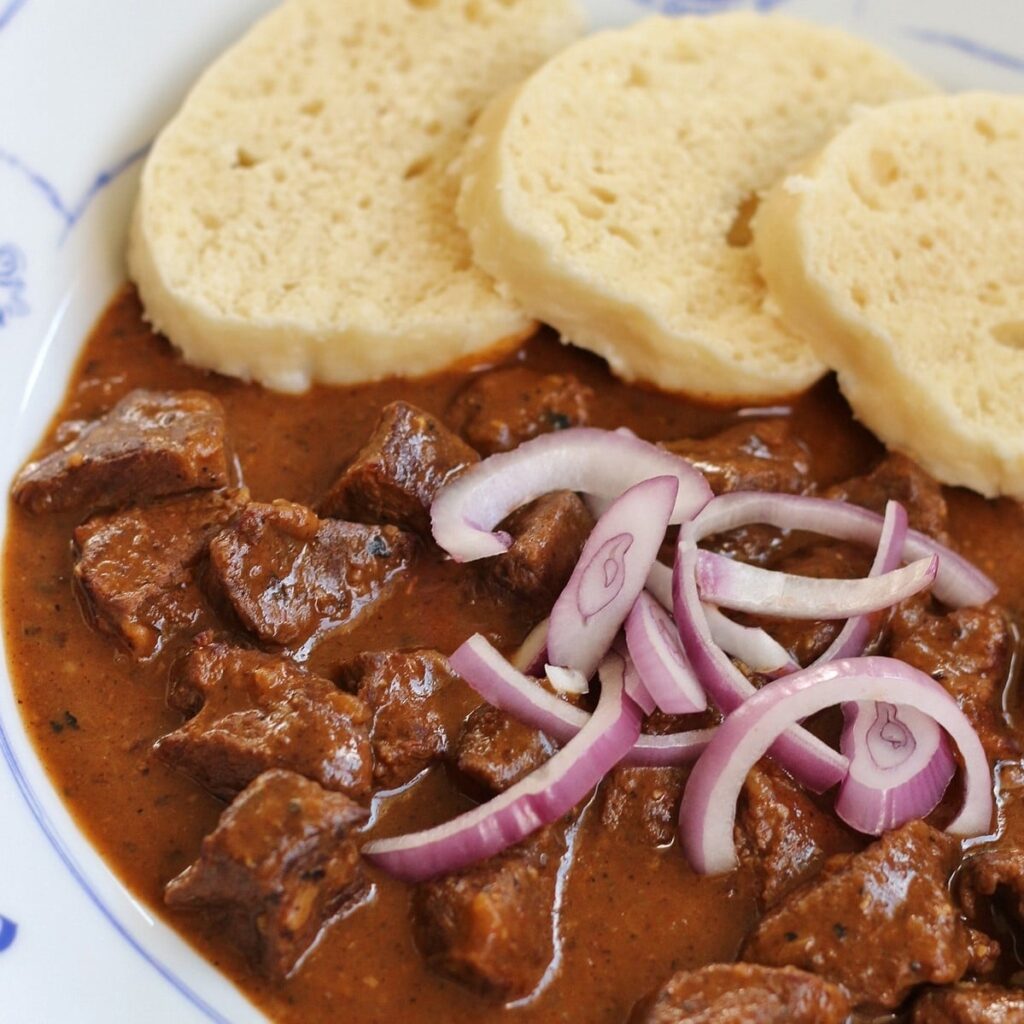
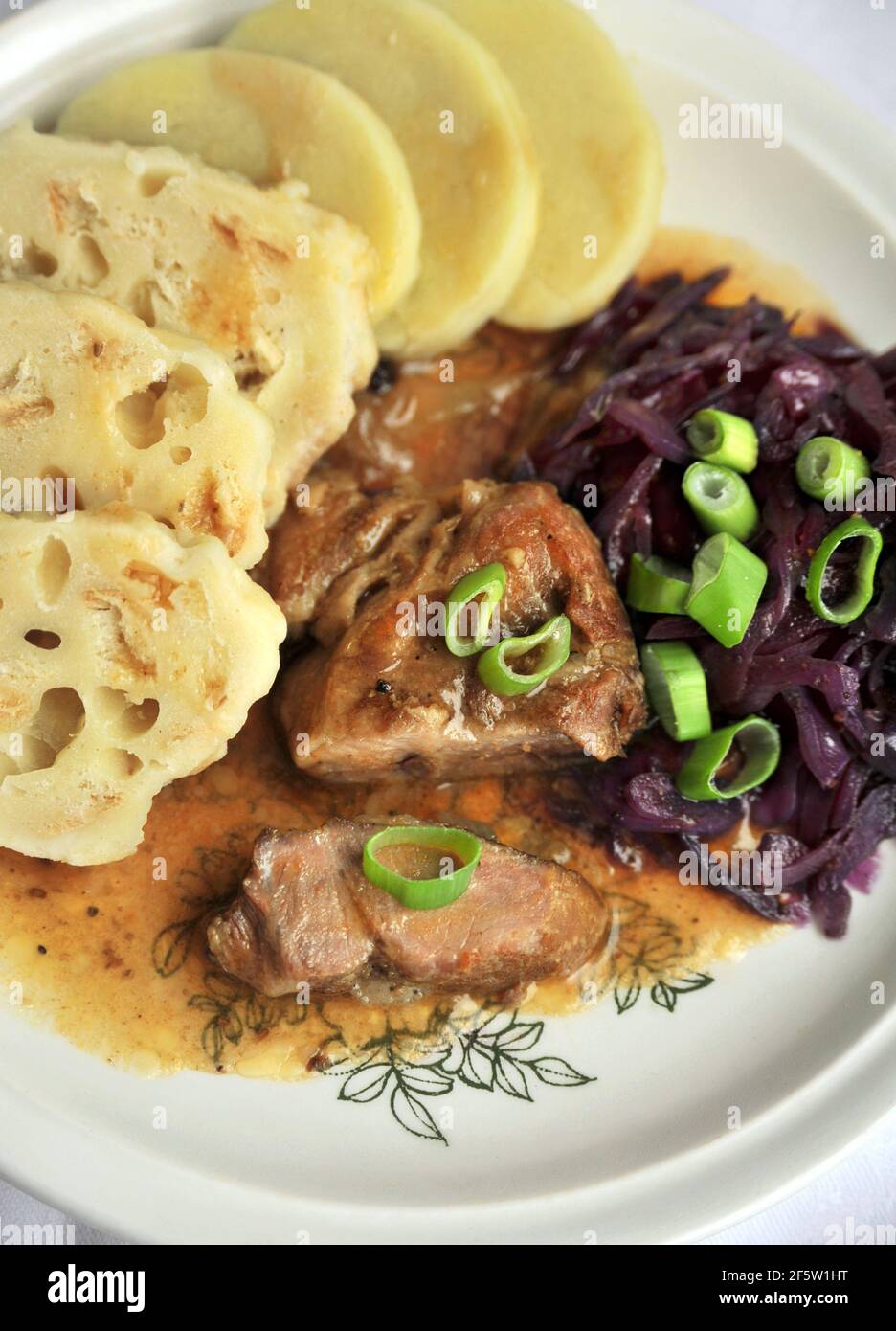
Beef Goulash

Beef Goulash

This thick stew contains tender beef chunks simmered with onions, garlic, and sweet paprika. The rich gravy is finished with fresh onion rings and typically served alongside sliced dumplings.

Notice the deep mahogany color of the paprika-spiced gravy when served.

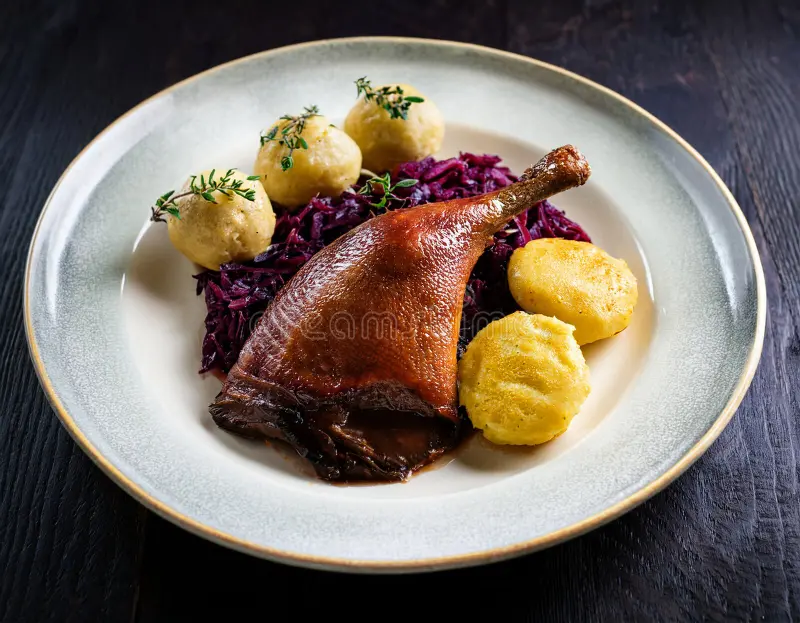
Roasted Duck with Red Cabbage

Roasted Duck with Red Cabbage

Slow-roasted until the skin becomes crispy, this classic dish is seasoned with caraway seeds. It is paired with sweet-and-sour braised red cabbage and potato dumplings to balance the rich meat.

Inspect the glistening caraway seeds baked directly into the crispy duck skin.

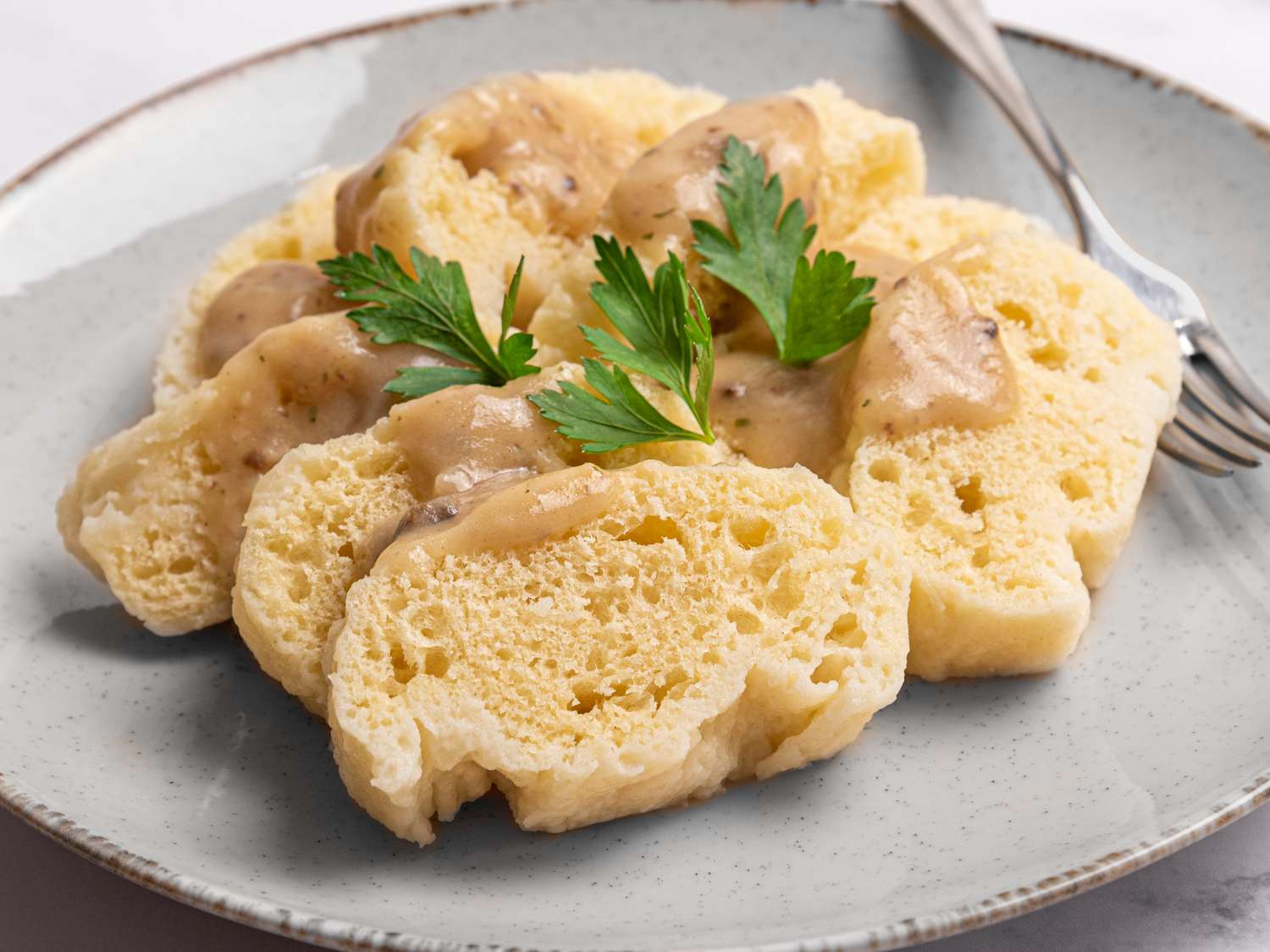
Bread Dumplings

Bread Dumplings

These sliced, steamed dumplings are a staple accompaniment designed to soak up thick gravies. The yeasted dough is mixed with small cubes of baked bread before cooking, giving them a distinct texture.

Examine the sliced cross-section to see the distinct cubes of baked bread.

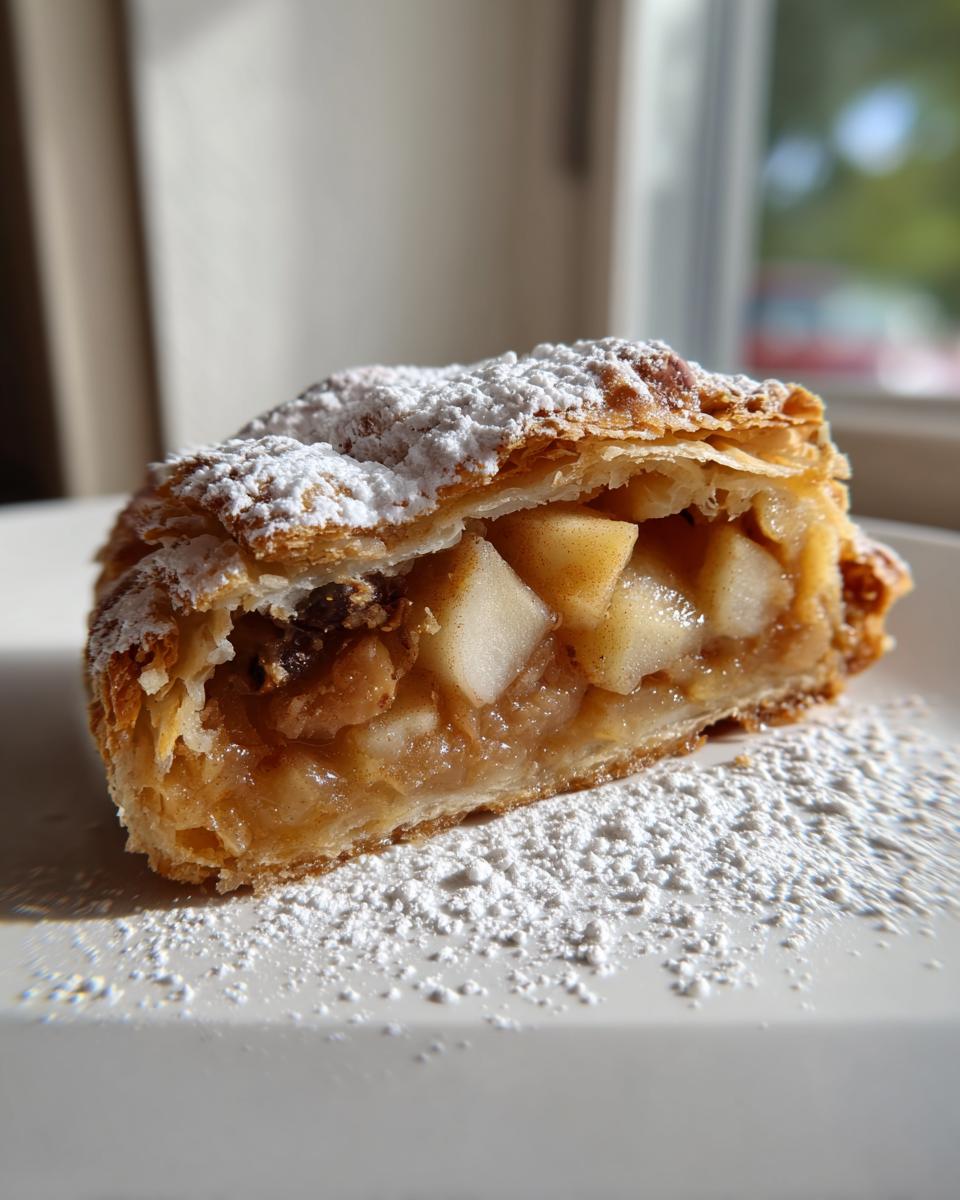
Apple Strudel

Apple Strudel

This pastry features thin layers of rolled dough wrapped around a filling of sweet apples, cinnamon, and raisins. It is often served warm alongside vanilla sauce or whipped cream.

Look for the light dusting of powdered sugar on the flaky pastry.

History

The Royal History Behind What Food Is Prague Known For

Bohemian cooking began in the fields, not the palace. Medieval chronicles record that by the reign of Charles IV, crowned Holy Roman Emperor in 1355, the lands around Prague were sown chiefly with rye, barley and cabbage. Livestock were kept for labour first and meat second. Pork, cheap to raise and simple to preserve, became the protein of the peasantry. Anyone asking what food is prague known for is really asking about that agricultural inheritance: grain, root vegetables, cured pig, and sour cabbage stored through long Central European winters. The aristocracy reshaped it. After the Battle of White Mountain in 1620, Habsburg rule bound Bohemia tightly to Vienna, and the kitchens of the nobility followed. Court cooks brought Austrian technique, Hungarian paprika and Bavarian roasting methods into Prague townhouses. Magdalena Dobromila Rettigová published her Czech cookbook in 1826, fixing recipes that had drifted between manor and cottage. Bread dumplings, once a way to stretch stale loaves, were refined into the accompaniment for roast beef in cream sauce. Beer, brewed in Bohemia since the Břevnov monastery received brewing rights in 993, anchored the table. Pilsner Urquell, first poured in 1842, gave the region its defining drink. The Boccaccio Ballroom belongs to this Austro-Hungarian afterglow. Built as part of the Grand Hotel Bohemia, completed in 1927 on Králodvorská 652/4 in Staré Město, its hall was modelled on the Spanish Hall of Vienna's Hofburg. Gilded stucco, mirrored panels and a coffered ceiling survive intact, restored after 1993. Visitors on a Prague old town tour still see the Habsburg vocabulary overhead while eating dishes descended from the same era — which is the clearest answer to what food is prague known for, served beneath the ceiling that shaped it. Entry is free, though access is restricted to events and dining guests.

993

Břevnov monastery is granted brewing rights, beginning documented Bohemian beer production.

1355

Charles IV is crowned Holy Roman Emperor, and Prague's grain-and-cabbage agriculture supplies an imperial capital.

1620

Defeat at the Battle of White Mountain binds Bohemian kitchens to Habsburg Vienna.

1826

Magdalena Dobromila Rettigová publishes her Czech cookbook, standardising dumpling and sauce recipes.

1842

The first Pilsner Urquell is brewed in Plzeň, fixing the pale lager that accompanies Czech cooking.

1927

The Grand Hotel Bohemia opens on Králodvorská with the Boccaccio Ballroom modelled on Vienna's Hofburg.

1993

Post-restitution restoration returns the ballroom's gilded stucco and mirrored panels to their original state.

Food & drink

Where to Experience What Food Is Prague Known For

Prague features a diverse dining scene where you can sample traditional Czech cuisine in both grand, historic settings and lively local taverns. These dining options near the Boccaccio Ballroom offer a taste of classic dishes alongside local beers and historic ambiance.

Boccaccio Ballroom

€€€

restaurant

Located directly inside the Grand Hotel Bohemia at Králodvorská 652/4, this historic Neo-Baroque hall serves traditional Bohemian dishes during classical concert events like the Mozart Dinner.

Lokál Dlouhááá

restaurant

Situated a five-minute walk from the ballroom at Dlouhá 731/33, this bustling venue serves fresh, classic Czech pub food alongside tank-poured Pilsner beer.

Café Imperial

€€

café

Located about a six-minute walk away at Na Poříčí 1072/15, this famous Art Deco establishment offers refined versions of traditional dishes under a historic ceramic-tiled ceiling.

U Červeného páva

€€

restaurant

A short walk from the ballroom at Kamzíková 543/6, this restaurant offers traditional Czech home-style cooking and local beers inside a historic monument building.

U Parlamentu

restaurant

Located about a ten-minute walk west at Valentinská 52/8, this pub serves classic Czech tavern dishes and fresh Pilsner beer in a casual, wood-paneled setting.

Insider tips

Insider Tips for Enjoying Prague's Famous Cuisine

Navigating Prague's culinary scene during a grand banquet requires understanding local customs and dining structure.

1

Pre-Ordering Alternative Menus

If you prefer vegetarian or poultry alternatives at the banquet, request them at least 48 hours in advance. The default main course is beef, and last-minute on-site requests cannot always be accommodated.

2

Ordering Beverages Early

Table service for drinks is paused during the musical performances to prevent distractions. Order your Pilsner Urquell or house wine immediately upon arrival during the 18:30–18:45 window or during designated concert breaks.

3

Navigating Czech Dining Portions

Classic Czech multi-course meals are historically heavy and feature large portions of meat, sauce, and potatoes. Pace yourself during the early courses to ensure you can finish the dessert course later in the evening.

4

Standard Prague Tipping Practices

While gratuities are sometimes included in large banquet packages, the standard local practice is to tip 10% for dedicated table service. Hand the tip directly to your server when settling any additional bar bills rather than leaving it on the table.

5

Opting for Local Pairings

Pair the rich meat courses with a crisp Pilsner Urquell or a local Czech red wine like late-harvest Cabernet Sauvignon. These drier beverages cut through the fat of classic heavy sauces far better than sweet cocktails or prosecco.

6

Managing the Dinner Flow

Dining is structured in three parts directly aligned with the concert segments. Focus on eating when a course is served, as the lights are dimmed and the service stops when the singers take the stage.

Avoid these

Common Dining Mistakes When Tasting Prague's Iconic Food

Prague's food scene rewards planning, and most disappointments trace back to a handful of avoidable errors. These are the ones that come up most often around Old Town dining and evening concert dinners.

Ordering from unpriced menus on Old Town Square

Check the printed price per 100g before ordering meat dishes, and confirm whether bread, sauces or service are charged separately. Walking two or three streets off the square usually halves the bill for the same dish.

Assuming trdelník is a traditional Czech recipe

Treat it as a modern tourist-market sweet rather than heritage cooking. If you want dishes with genuine Czech roots, ask for them by name at a sit-down restaurant instead.

Turning up for a dinner concert without booking

Reserve in advance through the venue's booking page. Seating for evening performances is limited and walk-ins are frequently turned away.

Arriving at the Boccaccio Ballroom too late

Plan to arrive between 18:30 and 18:45 so you can order drinks and be seated before the performance starts.

Going to the wrong entrance on Králodvorská

The venue address is Králodvorská 652/4, 110 00 Staré Město, Prague, inside the hotel building. Enter through the main hotel entrance rather than circling the block.

Treating free entry as open public access

Entry costs 0 CZK, but access is restricted to events and dining guests. Confirm your reservation, or call +420 234 608 111 to check before travelling across town.

Myth-busting

Myths and Facts About Czech Food Prague Is Known For

Misconceptions about Czech dining often arise from street food marketing and the meat-dominated menus of tourist pubs. Understanding the historical roots of local dishes helps clarify what residents actually eat.

MythTrdelník is a historic Czech dessert native to Prague.

FactThe chimney cake originated in Transylvania and became popular in Prague during the early 2000s as street food. Authentic Czech baking focuses on yeast-dough pastries like koláče, which are filled with sweet poppy seeds, plum jam, or cottage cheese.

MythCzech cuisine offers no traditional options for vegetarian diners.

FactClassical Czech food includes vegetarian staples such as smažený sýr (fried cheese) served with tartar sauce, fried cauliflower, and potato pancakes. Sweet main dishes like fruit dumplings topped with grated gingerbread and melted butter are also widely eaten.

MythHistoric Czech families always ate heavy meat dishes daily.

FactHistorically, meat was reserved for Sundays and special occasions, while daily meals relied on potatoes, cabbage, legumes, and grains. The current meat-heavy reputation developed during the industrialization and political changes of the 20th century.

Book

Check availability

Frequently asked

FAQ on what food is prague known for at Boccaccio Ballroom

Everything you need to know about what food is prague known for

What kind of menu is served during the Mozart Dinner event?

The culinary team prepares a refined three-course menu highlighting historic Bohemian flavors. Rather than just serving standard street food, the experience focuses on high-end interpretations of what food is prague known for, such as slow-cooked beef sirloin. This meal is served in intervals between operatic performances.

Are vegetarian or vegan options available at this historic venue?

Yes, the chef prepares dedicated vegetarian and vegan menus that swap out meat for modern plant-based options. If you want to sample what food is prague known for without animal products, you can request these alternatives when booking. The culinary staff accommodates most allergies with advance notice.

Can I visit the ballroom just to take photos without booking a meal?

General public access is restricted to dining guests and ticket holders, meaning you cannot enter just for sightseeing. While the space is one of the most famous Prague historic landmarks, the 0 CZK entrance fee only applies to those attending scheduled events. Booking a ticket for the concert dinner is the best way to admire the interior.

What is the dress code for attending a dinner event in the ballroom?

Guests are requested to wear smart casual attire to match the elegant atmosphere of the Grand Hotel Bohemia. Since this is a premium Prague culinary experience, sportswear, shorts, and flip-flops are not recommended. Dressing up adds to the historical ambiance of the evening.

How does the venue introduce tourists to the local dining culture?

The dinner presents a curated selection of regional specialties, focusing on the refined side of Czech dining. Instead of heavy tavern meals, it introduces visitors to what food is prague known for through delicate preparations of poultry and traditional dumplings. The dishes are carefully paired with local wines and beers.

What is the best arrival time to ensure a smooth dinner and concert flow?

The best arrival window is 18:30–18:45, which gives you plenty of time to order drinks and get seated before the performance starts. Arriving within this timeframe ensures you do not miss the opening musical segment. The first course of the dinner is served shortly after the opening scene.

Is the dinner and concert event suitable for families with children?

Children are welcome to attend, and the kitchen offers a special kid-friendly menu for younger guests. It is an engaging way for families to discover what food is prague known for while enjoying classical compositions. However, the event lasts several hours, so it is best suited for children who can sit through the musical segments.

Keep reading

More guides & pages